
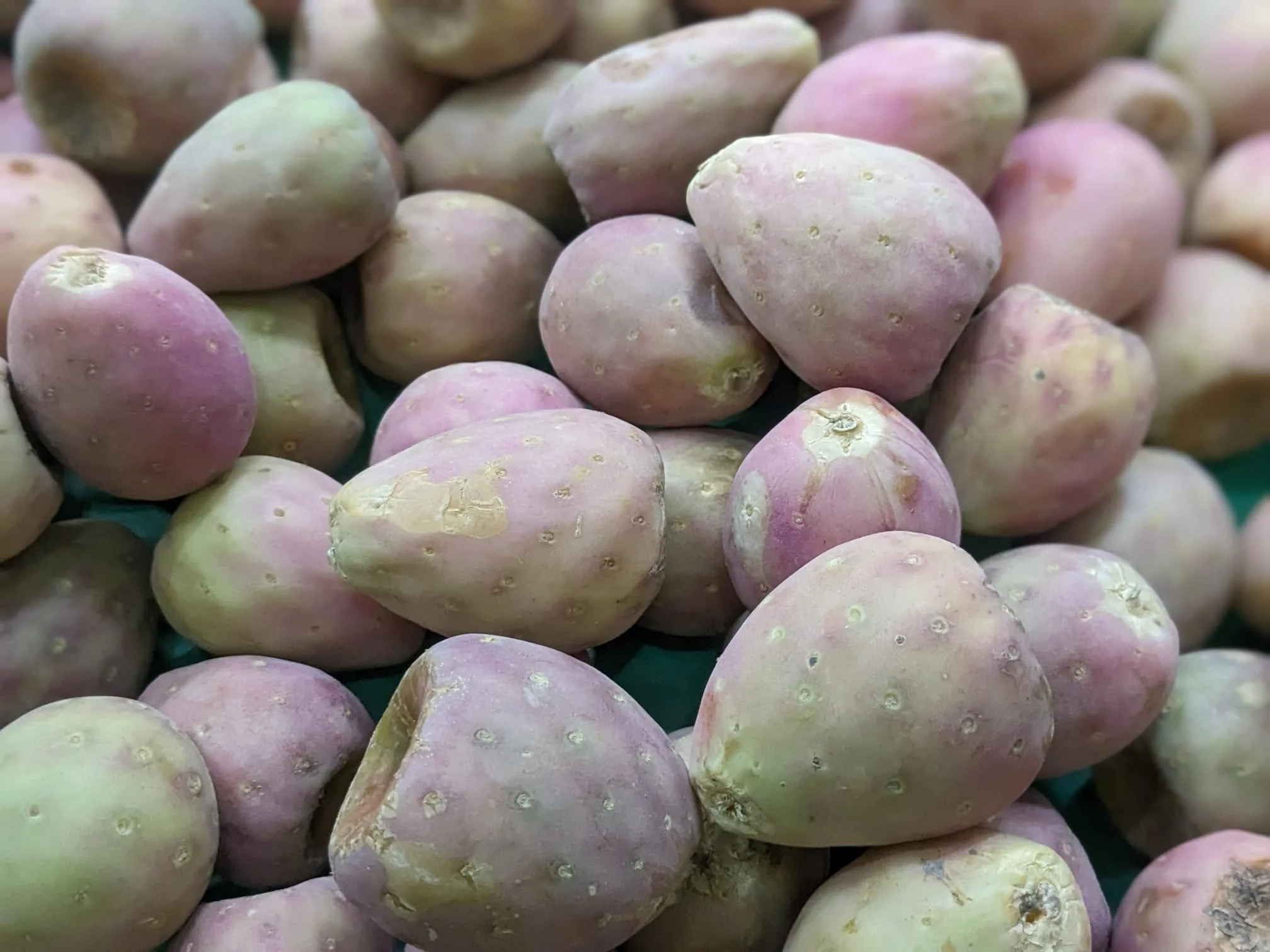
 Image 1 of 1
Scientific Name: Opuntia matudae or other Opuntia species
Common Usage: Used in Mexican salsas, jams, and moles for its tart flavor.
Unusual Ways to Consume: In health drinks, tangy syrups, or cocktails like xoconostle margaritas. Dried xoconostle is used in snacks or teas.
How to Eat: Peel and use the pulp in cooking, often with sugar for sweet dishes or in savory salsas.
Nutritional Benefits: High in vitamin C (estimated 20–30 mg/100g), fiber (3–4 g/100g), and antioxidants. Its low glycemic index supports blood sugar control, relevant for US dietary needs.
Culinary Versatility: Used in sweet (jams, agua de xoconostle) and savory (salsas, moles) dishes, popular in Mexican-American communities.
Seasonality: Peaks from late summer to early fall (September–November); available dried year-round.
Scientific Name: Opuntia matudae or other Opuntia species
Common Usage: Used in Mexican salsas, jams, and moles for its tart flavor.
Unusual Ways to Consume: In health drinks, tangy syrups, or cocktails like xoconostle margaritas. Dried xoconostle is used in snacks or teas.
How to Eat: Peel and use the pulp in cooking, often with sugar for sweet dishes or in savory salsas.
Nutritional Benefits: High in vitamin C (estimated 20–30 mg/100g), fiber (3–4 g/100g), and antioxidants. Its low glycemic index supports blood sugar control, relevant for US dietary needs.
Culinary Versatility: Used in sweet (jams, agua de xoconostle) and savory (salsas, moles) dishes, popular in Mexican-American communities.
Seasonality: Peaks from late summer to early fall (September–November); available dried year-round.